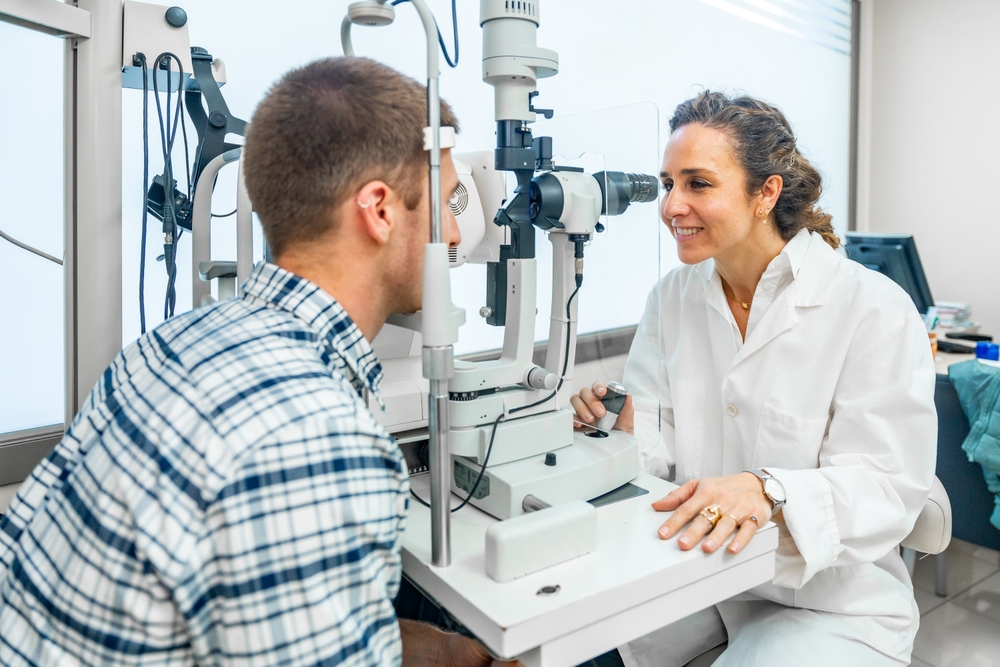



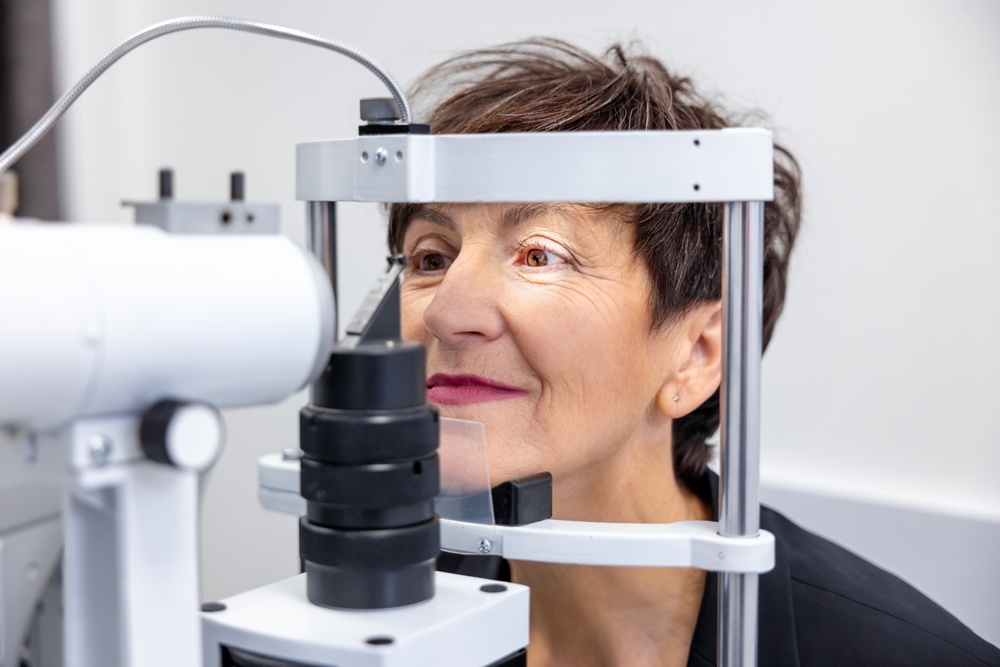
The two professions overlap, but not evenly. One is built around ongoing care, the other around surgery. Keep reading to learn how each doctor specifically handles a refraction and an eye exam, and which one to call first.
What Is the Difference Between an Ophthalmologist and an Optometrist?
An optometrist holds a Doctor of Optometry degree earned over four years of optometry school. Optometrists provide primary eye care such as comprehensive exams, refractions, contact lens fittings, and the medical treatment of eye disease. In Massachusetts, since optometrists are licensed to prescribe medications, optometrists and ocular disease specialists are able to manage conditions like dry eye and glaucoma directly.
An ophthalmologist, on the other hand, is a physician who completed medical school and a surgical residency. Cataract removal, retinal repair, and eyelid surgery are part of that training.
Refraction
Refraction is the measurement that produces your prescription. It determines how light focuses inside your eye and how much lens power sharpens it. This is the phoropter, and the question that comes with it: which is clearer, one or two?
It also tends to appear as its own line item, since many plans classify refraction as a vision service rather than a medical one, so how your coverage splits determines what you owe.
Refraction With an Optometrist
Refraction is daily work in an optometry office. Beyond distance vision, your optometrist checks how your eyes focus together, how much near power you need for screens, and whether your astigmatism axis has shifted. A quarter diopter that looks trivial on paper can be why your last pair of progressives never felt right.
For contact lens wearers, refraction is only a starting point, since a contact lens fitting also accounts for corneal curvature and tear film quality.
Refraction With an Ophthalmologist
In a surgical practice, refraction is often performed by a technician and reviewed by the physician. It establishes baseline vision before a procedure and confirms the result afterward, a narrower purpose than a routine prescription update.
Eye Exams
A refraction tells your doctor how you see. The health portion of the visit tells your doctor how your eyes are doing. Only one of the two can detect disease. Pupil response, eye alignment, intraocular pressure, and a dilated view of the retina and optic nerve all belong to a comprehensive eye exam.
Eye Exams With an Optometrist
For most adults, the optometrist performs that annual health check. Depth varies between practices, and the gap between a medical optometry office and a retail vision center usually comes down to how much of the appointment goes toward ocular health rather than eyewear sales.
Eye Exams With an Ophthalmologist
An ophthalmologist’s exam is narrower by design. Unless an ophthalmologist is seeing the patient for a routine exam, patients typically arrive with a referral or a known diagnosis, and the visit concentrates on that problem, which is often something like grading a cataract, imaging a macula, or planning surgery.
How Do I Know Whether I Should See an Optometrist or an Ophthalmologist?
Start with an optometrist for anything routine. Annual exams, blurry vision, new glasses, contact lens trouble, dry eye, and children’s vision all sit within primary eye care.
See an ophthalmologist when surgery is on the table. You rarely have to make that call alone, because your optometrist refers you, the surgeon operates, and your optometrist manages the follow-up.
Not sure which kind of eye doctor your symptoms call for? Schedule an appointment at All Eye Care Doctors in Chestnut Hill, MA today.